Architects are calling 2025 “the year of the smart roof,” so what does that mean for modern roof styles as we head into 2026 and beyond?
Nowadays, roof materials are lighter, more reflective, and more energy-efficient than ever before. That is a good thing if you happen to need a new roof in the Treasure Valley!
Whether you’re building new or upgrading, understanding these design options helps you make choices that improve both curb appeal and comfort. Let’s explore the top modern roofing ideas reshaping Boise homes.
What Are the Top New Style Roof Designs for Modern Homes in 2026?
Modern roofs in 2026 blend design, performance, and practical energy benefits. These styles are showing up across new builds and remodels because they sharpen curb appeal while giving homeowners stronger efficiency and cleaner lines. Here’s how each one works and why homeowners in Boise are asking for them.
Flat Roofs
Flat roofs give modern homes their signature minimalist silhouette. They create a crisp frame around the structure and make space for rooftop patios, solar arrays, and low-profile HVAC placement. When built with today’s membranes and insulation, flat roofs stay watertight and efficient even in winter freeze–thaw cycles.
Metal Butterfly Roofs
Butterfly roofs bring a dramatic V-shaped profile that pushes water inward to a central drainage line. They look bold without feeling flashy. Homeowners like them because the raised edges create taller interior ceilings and better natural light lines. Metal is the leading material for this style thanks to its strength, long life, and modern aesthetic.
Shed Roofs (Single-Slope Roofs)
A shed roof keeps one clean, angled slope. The look is striking but straightforward, especially on homes with asymmetrical layouts. This style handles snow load well, improves passive solar design on south-facing slopes, and pairs easily with vertical metal panels or oversized architectural shingles.
Architectural Shingles (Dimensional Profile)
Architectural shingles bridge the gap between traditional roofing and modern style. They add depth, shadow lines, and texture without overwhelming the exterior. They also hold up well in Idaho’s climate, making them a smart upgrade for homeowners who want modern curb appeal without switching to metal.
Which Modern Roof Styles Enhance Home Curb Appeal and Value?
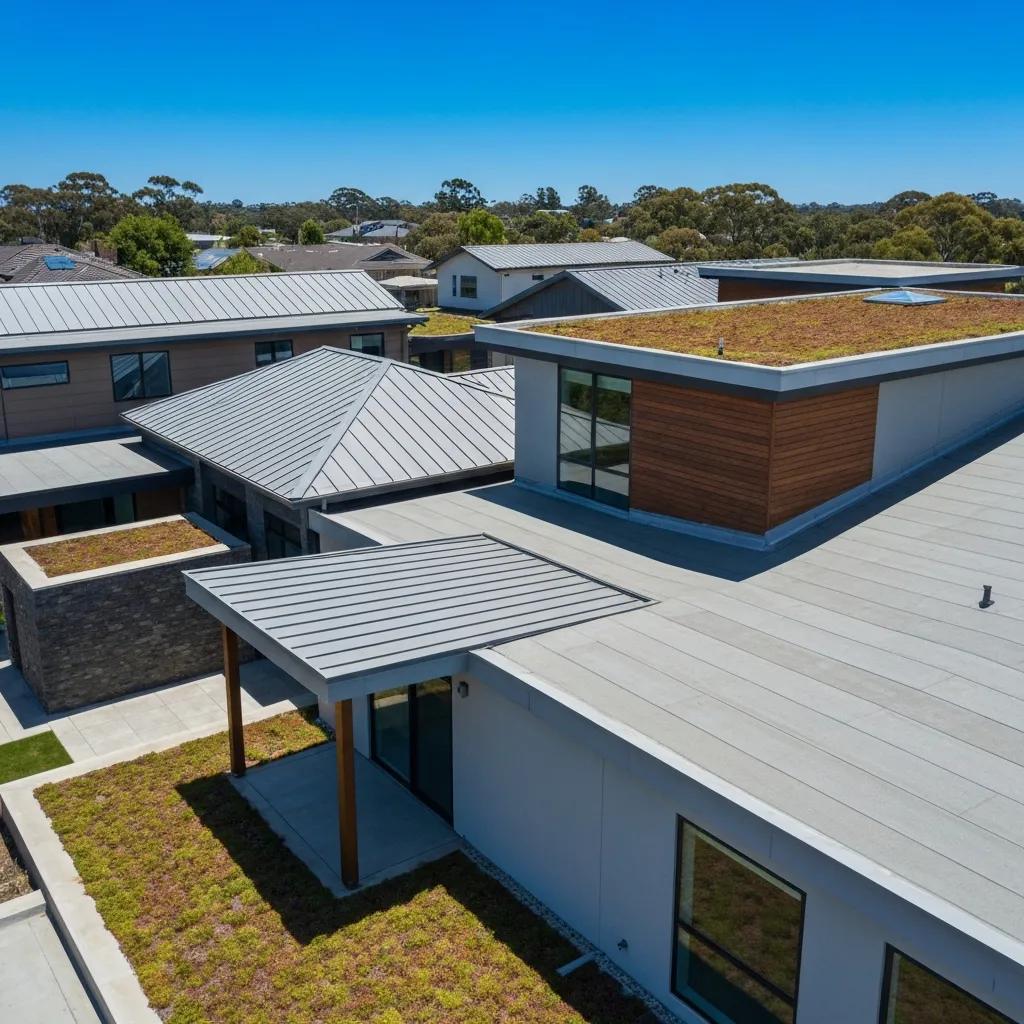
Modern roofs increase value when they do two things well: reshape the home’s silhouette and support long-term durability. Flat and butterfly roofs change the exterior instantly by creating cleaner visual lines. Metal shed roofs add height, openness, and a strong architectural presence. Architectural shingles improve resale by offering a modern update without pushing the design too far for traditional neighborhoods.
Strong curb-appeal contributors:
- Modern lines that match current architectural trends
- Materials that age well and photograph well for resale listings
- Shapes that add height, space, or symmetry to the exterior
How Do Flat, Butterfly, and Shed Roofs Fit Contemporary Architecture?
What roofs are popular? Right now, flat, butterfly, and shed roofs pair well with modern homes in the Treasure Valley because they move away from complicated rooflines and lean into clean, intentional geometry.
That simplicity works exceptionally well in Boise’s bright, high-desert climate, where intense sunlight, vast skies, and open views are part of the design. These roof styles reduce visual clutter and put the focus on vertical walls, expansive windows, and seamless indoor-outdoor living—features that show up more often in newer Boise, Eagle, and Meridian builds with contemporary architecture.
Key ways they integrate with modern homes:
- They support open-concept interiors by allowing higher ceilings and long structural spans.
- Their slope and drainage patterns work naturally with solar, skylights, and rain-management systems.
- Their clean shapes pair well with today’s modern siding combinations like fiber cement, metal, stone, and smooth stucco.
When viewed from the street, these roof styles instantly shift a home from “traditional suburban” to “modern architectural.”
Metal Roofing Styles Combine Durability with Modern Design
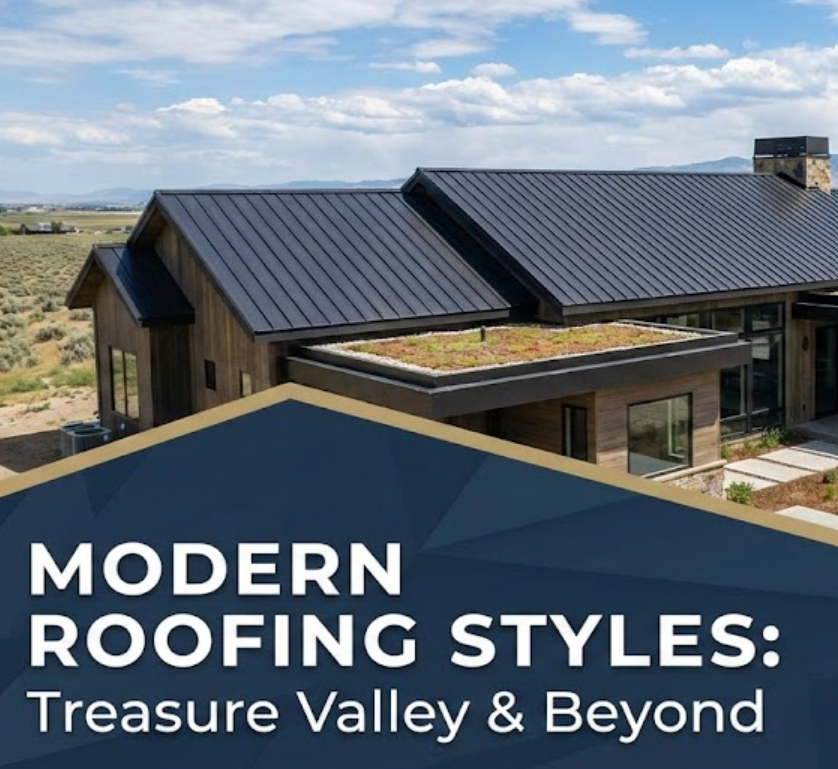
Metal roofing styles are a popular choice in Boise and across the Treasure Valley because they handle heat, wind, and snow while delivering a clean, modern look. From standing seam to metal shingles, these systems offer long lifespans, energy efficiency, and sharp lines that complement both contemporary and updated traditional homes.
What Are the Benefits of Matte Black, Charcoal, and White Metal Roofs?
Color does more than change appearance. It influences energy use, maintenance, and the home’s overall personality. Matte black, charcoal, and white have become the top three choices because each color plays a specific role in modern architecture. They match the clean symmetry and simple shapes that define new builds.
Matte Black Roofing
Modern homes use black roofs to add contrast without looking heavy. The finish softens the look and avoids shine. It pairs well with wood accents, stone, or all-white exteriors. It also hides minor dust and pollen.
Charcoal Roofing
Charcoal is the flexible middle ground. It looks refined without overpowering the exterior. It blends with warm or cool siding colors and keeps the roofline crisp. Charcoal works exceptionally well on homes with mixed textures, such as fiber-cement siding or stone.
White Metal Roofing
White reflects more sunlight than any other roof color. That reflection cuts heat gain and lowers cooling demand. White roofing fits minimal designs and coastal-inspired styles. It also helps reduce indoor temperature swings during long summer heat.
Overall benefits include:
- Clean, modern look
- Lower cooling needs depending on color
- Strong curb appeal with a long lifespan
Why Is Metal Roofing a Leading Choice for Energy Efficiency and Longevity?
Metal roofing delivers efficiency by reflecting more solar heat than traditional shingles. That means less heat entering the home and less strain on the HVAC system. The material also cools more quickly at night, reducing the amount of heat stored in attic spaces. Add proper ventilation, and homeowners see a noticeable improvement in comfort and energy use during peak summer months.
Longevity is just as important. Metal roofing holds its shape under sun, salt air, and heavy rain. It resists swelling, cracking, and moisture intrusion. A properly installed system can last 40 to 70 years, making it one of the longest-lasting materials available today.
Key reasons metal leads the durability category:
- Resists corrosion with protective coatings
- Won’t curl, crack, or warp in heat
- Stands up to high wind without loosening
- Maintains structural strength for decades
Metal roofing offers a future-proof solution for homeowners who want performance and clean design without compromise.
What Are the Key Features of Flat Roof Designs for Modern Homes?
| Feature | What It Means for Homeowners | Why It Works for Modern Designs |
|---|---|---|
| Low-Slope Profile | Appears flat but includes a slight pitch for drainage | Clean geometric lines that define modern architecture |
| Single-Ply or Membrane Roofing | Uses TPO, PVC, or EPDM for water protection | Flexible, durable surface that fits minimalist homes |
| Internal or Hidden Drainage | Water moves through scuppers or interior drains | Smooth, uninterrupted roof edges for a sleek exterior |
| Solar Compatibility | Easy mounting due to large, flat surface area | Ideal for solar panels or future-ready energy upgrades |
| Usable Roof Space | Can support rooftop patios or HVAC placement | Expands livable space in urban and modern layouts |
What Maintenance and Weather Resistance Should Homeowners Expect?
What can you expect with flat roofs and some of the new modern roof styles in the Boise area?
Flat roofs thrive when homeowners understand how they work. They are designed to handle rain, sun, and temperature swings, but routine care protects their lifespan and performance. More maintenance does not mean more problems. It simply means flat roofs reward attention with long-term reliability.
Homeowners can expect the following:
- Seasonal debris checks to keep drains clear and prevent minor ponding.
- Annual roof inspections to confirm seams, membranes, and flashing remain tight.
- Strong UV resistance when built with modern membranes like TPO or PVC, helps with HVAC costs.
- Better wind performance because the low profile reduces uplift.
Which Architectural Shingles Offer a High-End Look with Practical Benefits?
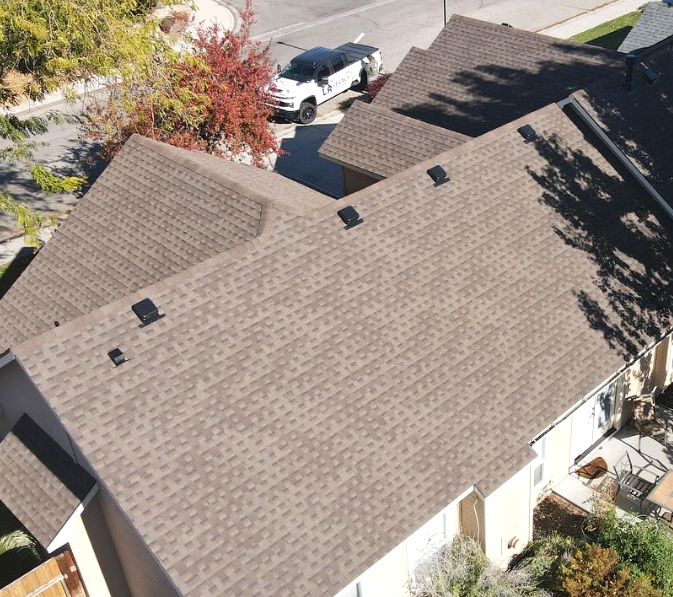
At Legacy Roofing, we only install architectural asphalt shingles. As the leading roofer in Boise, there is a reason why!
Architectural shingles are the go-to choice for homeowners wanting a modern design without the cost of premium materials. Their layered construction, deeper shadows, and dimensional texture make the roof look more intentional. They pair well with new architectural styles, especially when matched with bold trim or contemporary color palettes.
Top advantages of GAF architectural shingles include:
- Richer visual depth, which boosts curb appeal without premium pricing.
- Better wind ratings than basic three-tab shingles, making them reliable during Idaho storms.
- A broad selection of tones, including charcoal, driftwood, and modern slate hues that complement minimalist homes.
- Longer warranties, thanks to thicker construction and stronger adhesives.
Architectural shingles offer that clean, high-end finish while staying budget-conscious.
How Do You Choose the Right New Style Roof for Your Home’s Architecture?
It is well known that the Boise region has hot summers and cold winters, making the roof style you pick more than just a cosmetic thing!
Selecting the right new style roof requires weighing climate suitability, budget versus expected lifespan, and local regulations or HOA restrictions to ensure the chosen design performs and complies over time. Consider these three decisive factors when evaluating roof options:
- Climate Compatibility: Match materials and slope to local weather (snow load, rainfall, sun exposure).
- Budget vs. Lifespan: Balance upfront cost with expected service life and maintenance obligations.
- Local Codes and Architecture: Verify permits, fire ratings, and HOA design rules before finalizing materials.
What Factors Should Influence Roof Style Selection: Budget, Climate, and Local Regulations?
Most people start with “What looks good?” You should start with “What will last here?” Style matters, but your budget, local weather, and rules on paper decide which designs truly make sense.
Budget: What You Can Spend Now and Later
Budget is not only the installation price. It is also future repairs, maintenance, and energy use. A good roof fits both your upfront number and your long game.
Here is how to think about cost simply:
- Installation cost per square foot. Flat and simple gable roofs usually cost less to frame and cover. Complex shapes with multiple planes, curves, or extra valleys cost more. Metal and high-end architectural shingles cost more than basic shingles but often last longer.
- Expected life span and replacement cycle. Cheaper materials often need replacement sooner. That means you pay again in 15 to 20 years instead of 30 or more. A slightly higher first cost can pay off if you plan to stay in the home.
- Energy savings and comfort Some styles and colors reflect more sun and vent better. That can cut cooling bills in sunny climates. In colder regions, certain designs handle snow load and ice better, which avoids repair bills later.
A good contractor should show you the “total story,” not just the lowest bid.
Climate: How Your Roof Has to Work in Real Weather
Roof style must match what the sky throws at it. Sun, snow, wind, and rain all change what works.
Key climate questions:
- Does your area see heavy snow or just light dustings? In snow country, steeper pitches help snow slide off. Flat and very low-slope roofs need excellent waterproofing and drainage.
- Do you deal with long, hot summers or fast temperature swings? In hot, sunny zones, low-slope or simple shed and butterfly shapes can pair well with cool roofing surfaces and solar. In freeze-thaw regions, designs must handle ice along eaves and around valleys.
- How strong are local winds and storms? More wind means more uplift force on edges and overhangs. Certain roof shapes catch the wind more than others. Cleaner lines with fewer loose edges handle gusts better.
Climate should narrow your list before you ever pick a color.
Local Regulations: Codes, HOAs, and Neighborhood Fit
Even the best design fails if it ignores rules. You want a roof that passes inspection, fits your block, and does not trigger letter after letter from the HOA.
Things to check early:
- Building code requirements: Local code sets minimum pitch for certain materials, snow-load design, fire rating, and details for low-slope roofs. Some styles need exceptional framing or underlayment to pass inspection.
- HOA and subdivision rules. Many neighborhoods limit roof colors, materials, and visible profiles. A matte black metal roof might be perfect for you, but it is not allowed on a traditional street with strict guidelines.
- Historic or design district limits In older districts, you may be required to match a certain look from the street. That can affect whether you use metal, architectural shingles, or other visible modern styles.
- Solar, skylights, and future add-ons If you plan to add solar panels or skylights later, some roof shapes and surfaces make that easier. A simple plane with good southern exposure plays nicer with solar than a chopped-up roof full of intersecting lines.
Putting Budget, Climate, and Rules Together
The right roof style is the overlap of three things: what you can afford, what survives your weather, and what is allowed where you live. Start by answering three simple questions:
- How long do you plan to stay in this home?
- What does the weather regularly do to the roofs nearby?
- What do your code office and HOA actually allow?
From there, you can choose between flat, shed, butterfly, metal, or architectural shingles with much more confidence. A good local roofer should walk you through each factor and point you to a style that does more than look good from the curb. It should fit your life, your street, and your climate for years.
The Verdict on Modern Roofs Boise
Modern roofs have moved well beyond basic shingles—especially here in the Treasure Valley. The right roof design can refresh your home’s look while standing up to Boise’s heat, wind, and winter weather for years to come. If you want a roof that looks great and works just as hard as it should, give us a call. We’ll help you choose an option that fits your style and makes sense for Idaho’s climate.
 HomeAdvisor & Angie’s List Roofing in Boise: Can You Trust These Sources?